
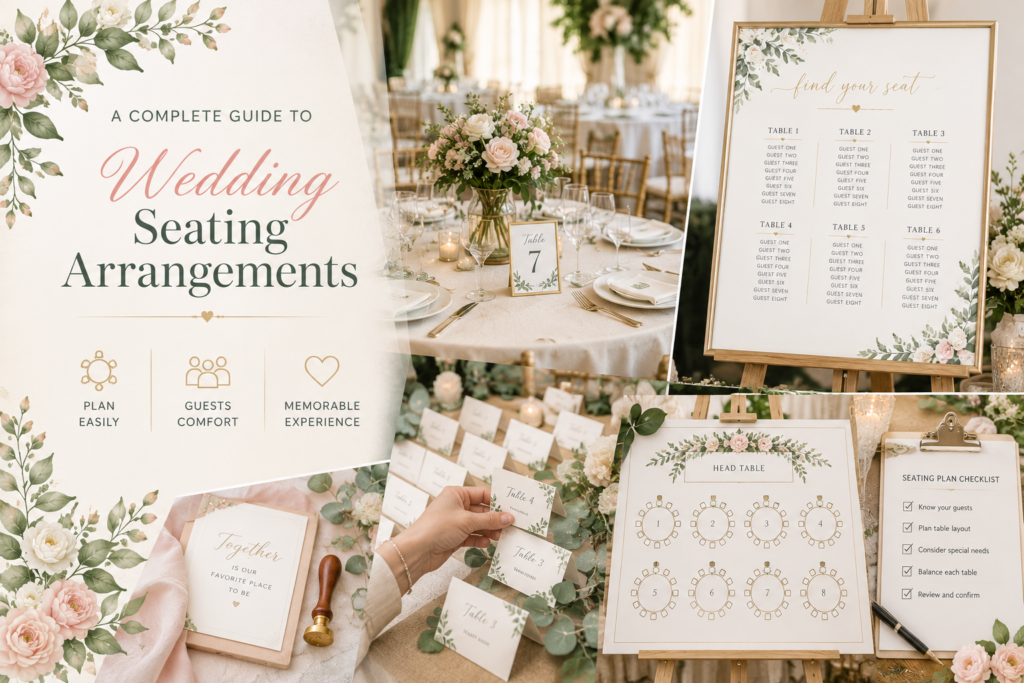
Wedding Seating Chart Guide: How to Make Seating Arrangements for a Wedding
Figuring out where guests sit often feels like a difficult logic puzzle. It’s normal to feel a little stressed, given that RSVPs change and table sizes vary. It is just a reaction to the complex math.
Think of the layout as a way to show hospitality. When guests sit with people they like, the whole room feels more alive. By using a simple system, learning how to make a seating chart for a wedding becomes straightforward. It is about fun. A good plan lets you handle the details without the headache.
Seating arrangements can cause confusion, awkward situations, and even chaos at the last minute if there isn't a clear plan. But if you do it the right way, making a seating chart can be easy, neat, and even fun.
What is a Wedding Seating Chart?
A wedding seating chart is a planned arrangement of where guests will sit during your wedding events, especially during the reception. It helps ensure that guests sit comfortably, social groups stay together, and the overall flow of the event stays organized.
Step-by-Step Guide to Creating a Wedding Seating Chart
Breaking the process into simple steps makes it much easier to manage.
Finalize Your Guest List
Hold off on planning until the headcount is in. That number tells you how many tables the venue needs. Most couples use one spreadsheet for RSVPs and meal choices.
Pick a date to call latecomers. Give yourself a two-week buffer to prevent frantic midnight changes.
Seat the VIPs First
Start by placing room anchors: the couple, family, and wedding party.
- • Decide between a sweetheart table or head table.
- • Parents/grandparents sit in front (elderly near exits).
- • Wedding party stays with you. Keep plus-ones nearby.
Group Guests Smartly
Begin grouping the remaining crowd.
- • Natural connections: Identify clusters like cousins.
- • Social bridges: Mix smaller groups with outgoing friends to keep energy high.
- • Mixed seating: Don't force a "singles table." Tuck solo guests where they won't feel isolated.
Handle Sensitive Situations
- • Give divorced or separated parents their own tables.
- • Put guests who clash at opposite ends of the hall.
- • Keep mystery plus-ones with their dates and seat them near your friendliest guests.
Plan for Special Needs
- • Make an activity table for kids near their parents.
- • Seat guests with limited mobility near aisles/exits.
- • Leave space for wheelchairs and walkers.
- • Keep older family members away from loud speakers.
Assign, Review & Adjust
Start assigning tables (families closer to stage, friends together). Then, review the plan to check for conflicts and equal distribution. A second review avoids last-minute issues.
Wedding Guest Seating Styles & Layout Ideas
The way you set up the seating at your reception affects everything, from how easily guests can talk to each other to how the room feels when they walk in. One of the most important choices you'll make for your party is how you set it up.
Traditional Round Tables
Round tables seat 6 to 10 guests and are designed for easy, intimate conversation. Everyone faces the center, making the format feel naturally inclusive. They suit formal settings well but can feel predictable and use floor space less efficiently than other options.
Long Banquet Tables
Long rectangular tables bring a dramatic, family-style warmth to any reception. They work beautifully in barn, rustic, or long, narrow venues and photograph strikingly. The downside is that conversation stays close to immediate neighbors, so guests at opposite ends rarely interact.
U-Shaped & Serpentine Tables
These designs give a room a modern, architectural look that also makes a statement. They work best for smaller guest lists and modern or garden venues. When it comes to serving and spacing, you need to plan more carefully than usual.
Lounge-Style Seating
Sofas, armchairs, and low tables are grouped together in a casual way that makes it easy for people to talk and feel at ease, like at a cocktail party. This style is best for shorter receptions that don't include a full sit-down dinner. It gives the event a chic, editorial look.
Choose a style that matches the level of formality of your wedding, the shape and size of your venue, and the kind of experience you want to give your guests. Follow your overall vision, and the right layout will come naturally.
How to Group Wedding Guests Effectively
To make a seating plan work, you need to put guests in the right groups.
Balance Personalities
Mix guests who are outgoing with those who are quiet to keep things balanced.
Keep Families Together
For comfort, seat families together.
Avoid Isolating Guests
Don't leave people alone.
Seat Children Properly
Keep kids close to their parents.
Grouping people carefully makes sure that everyone has a good time.
Final Wedding Seating Checklist
The last and most important thing you need to do before your wedding is to finish your seating plan. Make sure that all of your planning leads to a smooth time.
- Finalize guest list (RSVPs + plus-ones)
- Recheck table assignments
- Prioritize VIP & family seating
- Prepare name cards/display
- Review special guest needs
- Coordinate with planner & venue
- Keep buffer seats for last-minute changes
Common Wedding Seating Mistakes to Avoid
- Putting off the work: Waiting until the last minute will leave you overwhelmed.
- Forgetting vendor meals: Vendors like the DJ need a spot to eat since they work all night.
- Tight floor plans: When tables sit too close, servers can't move and dinner slows down.
- Trying to please everyone: It is impossible to find universal approval. Stop trying.
- Hard-to-read fonts: Use legible fonts so guests find their seats quickly and don't block the door.
Conclusion
Figuring out how to make a seating chart for a wedding involves more than just picking chairs. Conversations live or die based on the floor plan. While it might feel early, start by placing close family first. Grouping friends together helps keep the vibe right. Digital tools usually help if someone cancels.
This wedding seating arrangement guide keeps things simple. It is a big job, but guests don't forget the effort.
Simplify your wedding seating arrangement with AyeDu
Late RSVPs and messy vendor emails ruin the mood. To stay organized, you'll need a tool that syncs everything.
AyeDu simplifies how to make a seating chart. When the guest list fluctuates, your map updates table totals right away. If someone calls with an allergy, just drag their name to a new chair. One click handles the math and logs every catering change.
Create Seating ChartFrequently Asked Questions
1. What is the best way to do a wedding seating chart?
First, make a final list of guests. Then, group them by how well they know each other and how comfortable they are with each other. Choose a good table layout and assign seats or tables while keeping the balance and the guests' experience in mind.
2. Where to create a wedding seating chart?
You can make a seating chart with digital tools like wedding planning apps, spreadsheets, or online seating planners. For simpler setups, printable templates and manual charts also work well.
3. When should you finalize the seating chart?
You should finish your seating chart 1 to 2 weeks before the wedding, after you get all the RSVPs. This gives you time to make last-minute changes and work with vendors.
4. How to build your own wedding seating chart?
Start with your confirmed guest list, group guests in a logical way, choose a table layout, and then assign seats or tables. Check the plan and make any changes that will make it more comfortable and run more smoothly.
5. What are creative wedding seating chart ideas?
Themed boards, digital displays, escort cards, mirror signs, or interactive layouts are all creative ideas. These not only help guests find their way, but they also make your wedding decorations look better.
